Making Sustainability More Accessible for Floral Businesses
An Interview with Dr. Amanda Solliday, Senior Program Manager at Sustainabloom
Sustainability is an increasingly important consideration for businesses throughout the floral supply chain,but knowing where to start can be a challenge. What does sustainability look like for a flower grower, wholesaler, or retailer? How can businesses
identify meaningful opportunities without taking on more than they can manage?
Sustainabloom, an initiative established by the American Floral Endowment (AFE) in 2022, was created to help answer those questions. Through practical, floriculture-specific resources, Sustainabloom helps businesses evaluate their current practices, identify opportunities for improvement, and take manageable steps toward greater sustainability.
We spoke with Dr. Amanda Solliday, Senior Program Manager at Sustainabloom, about the resources, common sustainability misconceptions, and practical ways floral businesses can incorporate sustainability into their operations.
Q: What are Sustainabloom's sustainability planning templates, and who can benefit from them?
Dr. Solliday: We initially wanted to create something for people who were interested in sustainability but weren't sure how to get organized or where to start.
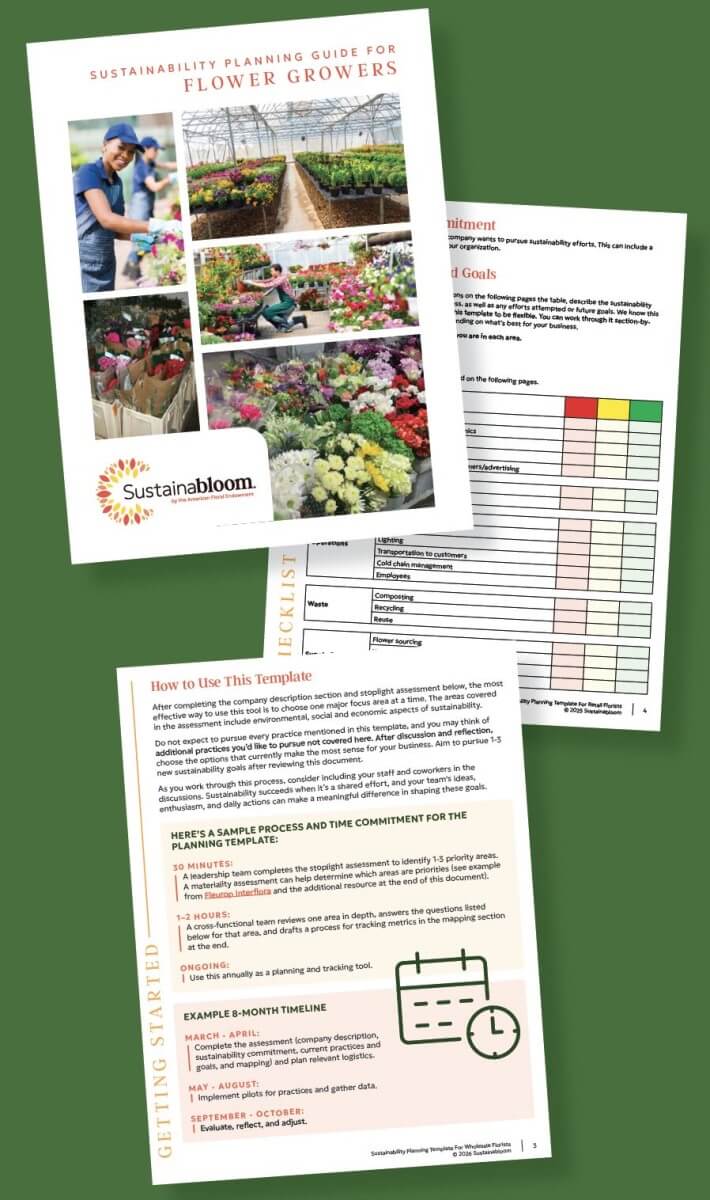
We recognized that businesses needed practical, floriculture-specific guidance. There is plenty of general sustainability information available, but we weren't finding resources tailored specifically to our industry. We also heard that people wanted checklists to help them understand what they should be doing and considering.
The templates are designed for businesses at all stages of their sustainability journey. If you're just getting started, they can help you identify topics of interest and explore opportunities. If you already have a sustainability program, they can help you find ideas to deepen or broaden your existing efforts.
One thing we recommend is setting two or three goals that you can accomplish within the next year. Sustainability is such a broad topic that it can become overwhelming quickly. It's not something you achieve overnight; it's a series of choices and decisions that happen over time. The templates are designed to help guide businesses through that process.
Q: If a business has limited time and can only focus on one sustainability practice, where should it start?
Dr. Solliday: Start by considering what your customers are asking for and what you keep hearing repeatedly. Is there something they really want? That can be a good place to begin.
When selecting priorities, think about what's most relevant to your business. For example, if you're interested in becoming more involved in your community, you might look for ways to give back or invite community members into your business. If you operate in an area with significant water scarcity, water conservation might be a priority.
A few other considerations include:
- Cost savings: Look for opportunities that are cost-neutral or could save money by addressing an inefficiency.
- Customer interests: Consider what your customers care about and whether their feedback can help guide your priorities.
- Practical goals: Choose something you can realistically tackle within the next six months to a year. Taking on too much at once can lead to setbacks and discouragement.
- Measurable progress: Identify something you can measure, where the relevant data is stored, and who will be responsible for tracking it.
The best starting point will vary depending on the business, its circumstances, and its capacity.
Q: How can floral businesses communicate their sustainability efforts to customers?
Dr. Solliday: Don't overthink it. You don't have to have the perfect outcomes before you start sharing, whether through a newsletter, social media, or another communication channel.
People want to understand your motivation. They get excited about your progress if you're excited about your progress. You don't have to be at the destination before you start communicating.
I think it's important to show progress as you make it. Share why you're motivated to start a program, what you're doing, and how things are going along the way. Rather than waiting until a practice is fully implemented before talking about it, communicate throughout the process and help people get excited as you do.
Sustainabloom has also published articles with tips for communicating environmental and social sustainability practices with customers.
Q: How can business owners get employees and colleagues involved in sustainability efforts?
Dr. Solliday: There is a role for both leadership and employees.
During a recent visit to a florist, the owner was interested in sustainability, but many of the ideas came from employees who work directly with flowers every day. They identified where waste was happening and how processes could be made more efficient.
It's helpful to have motivation and support at higher levels, but employees also play an important role. They see the day-to-day details and may recognize opportunities to improve processes that others might miss.
When it comes to gaining buy-in, two good places to start are the budget and customer feedback. Look for practices that are cost-neutral and consider whether customer demand or feedback demonstrates that sustainability matters to the people your business serves. If you don't already know what customers think, ask them.
Q: What is one common misconception about sustainability in the floral industry?
Dr. Solliday: One misconception is that people will be shamed if they aren't doing everything perfectly. That's unfortunate because everyone can do better. Being open to making changes is one of the most important things.
Another misconception is that sustainability is primarily about environmental issues. While environmental sustainability is important, sustainability also includes social and economic considerations.
Social sustainability involves what a business does in its community and how it treats its employees. Economic sustainability involves planning for the long-term future of the business so it can continue operating for years to come. I sometimes think about it as planning your business so it will still be around 100 years from now.
All three areas are important. When talking with people about sustainability, it helps to understand what motivates them rather than assuming they share your interests. Sustainability encompasses more than people might initially realize. It's not just water conservation or renewable energy; there are many other topics to consider.
Explore Sustainabloom's Resources
You may already be incorporating sustainable practices into your business without recognizing them as part of a broader sustainability effort.
Sustainabloom's planning templates provide an opportunity to assess what you're already doing, identify areas for improvement, and establish two or three achievable goals for the year ahead. You don't need to tackle everything at once. Start with what's relevant to your business and build from there.
- Flower Grower Sustainability Planning Template
- Wholesaler Sustainability Planning Template
- Retailer Sustainability Planning Template
Additional Sustainabloom Resources
- Government Funding Opportunities
- Communicating Social Sustainability Messaging to Your Consumers
- Communicating Environmental Sustainability Messaging to Your Consumers
Visit Sustainabloom.org to explore additional resources and guidance for the floral industry. Contact Dr. Amanda Solliday with questions, asolliday@afeendowment.org.