
Peony Grower Secures Federal Funding & Advice on How You Can Too
An innovative Alaska peony project highlights how federal grant funding can support new markets, research, and business opportunities across the floral industry.
The U.S. Department of Agriculture (USDA) recently announced $86.6 million in grant funding for 609 projects across 56 states and territories through its Specialty Crop Block Grant Program (SCBGP). The program supports projects designed to strengthen the competitiveness of specialty crops, including horticulture and nursery crops, through research, marketing, education, food safety, and industry development.
While the program supports a broad range of agricultural businesses, several funded projects have direct connections to the floral industry. One particularly innovative project comes from EagleSong Family Peony Farm, which received $59,958 to research value-added processing opportunities using Alaska-grown peonies.
Exploring new market opportunities
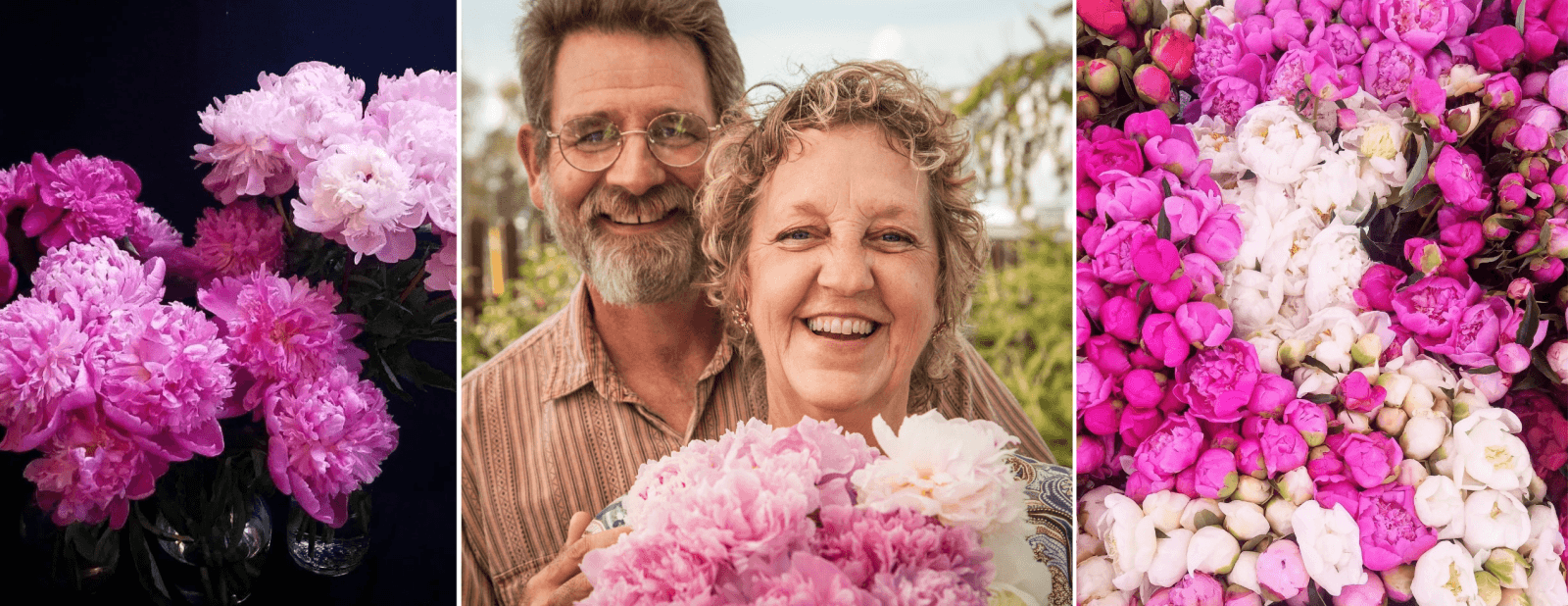
EagleSong Family Peony Farm, operated by Mike and Paula Williams, will use its grant funding to research ways to transform peony flowers and foliage into high-value botanical extracts and concentrates.
Potential applications include natural flavoring, plant-based color, and ingredients for food, beverage, and cosmetic products. The research will also establish a foundation for pursuing FDA Generally Recognized As Safe (GRAS) status for peony-derived ingredients intended for food, beverage, or cosmetic use.
For the farm, the project is an opportunity to address some of the economic and logistical challenges facing peony producers, particularly in Alaska.
These challenges prompted Mike and Paula to explore alternative markets for their harvest. Rather than relying exclusively on selling peonies as cut flowers or roots, they began investigating the potential to develop commercial botanical products from flowers and foliage.
Growers have historically used peonies to make products such as jellies, syrups, soaps, and cosmetics. The goal now is to explore whether those applications can be developed into a commercially viable market.
Importantly, the project's potential extends beyond Alaska. EagleSong hopes the research will create a pathway that other peony producers across the United States can use to explore value-added products and new revenue opportunities.
A research project built over several years
The $59,958 award is not the starting point for EagleSong's research. The farm has spent approximately three years exploring extraction methods, developing usable extracts, and identifying the regulatory requirements involved in bringing peony-derived ingredients to market.
One of the biggest hurdles is determining the appropriate regulatory pathway for food and beverage applications.
The FDA's Generally Recognized As Safe (GRAS) designation establishes whether an ingredient is considered safe for its intended use, including the quantities in which consumers may reasonably be expected to consume it.
Because peonies do not currently have an established GRAS designation for these proposed applications, EagleSong is using the grant to pursue a more formal research and evaluation process. EagleSong will work with outside companies for specialized extraction and laboratory services, while also collaborating with other Alaska peony producers and industry organizations.
Mike emphasized that the project must benefit the broader industry rather than a single farm. Sharing research findings and progress with other producers is an important part of that commitment.
Lessons for businesses considering grant funding
For businesses and organizations interested in pursuing funding opportunities, Mike shared several takeaways from EagleSong's experience.
1. Start with a clearly defined problem.
Rather than trying to address multiple challenges through one grant, Mike recommends identifying a specific issue or opportunity that research or funding can help advance. He suggests keeping an application focused on no more than three primary goals.
For EagleSong, that focus is establishing a pathway for peony-derived ingredients to enter new markets by navigating the regulatory requirements.
2. Do the groundwork before applying.
EagleSong's previous research and development work helped strengthen its application. Having already explored extraction methods, identified regulatory challenges, and secured smaller grants demonstrated that the project had momentum and a foundation for success.
Mike noted that the application process was more manageable because the farm had already gathered much of the information needed to develop its proposal.
3. Build relationships and identify collaborators.
Support from other organizations can play an important role. EagleSong received letters of support from the Alaska Farm Bureau and multiple peony producers throughout the state.
The project will also involve outside companies, laboratories, and potentially universities to provide specialized expertise.
4. Be prepared for the work after receiving funding.
Receiving an award is only one step. Mike noted that refining the application to meet grant requirements and establishing project metrics and reporting procedures required considerable additional work.
The funding also comes with ongoing responsibilities, including annual reporting and meeting established milestones.
5. Look at funding as a longer-term process.
EagleSong's experience demonstrates that pursuing grants can involve multiple applications and funding sources over several years. The farm has received smaller grants to support its research and has also explored USDA's Small Business Innovation Research (SBIR) program.
The team has used each opportunity to build its research, experience, and readiness for future funding applications.
An opportunity for the broader floral industry
Although EagleSong's project focuses on peonies, Mike sees potential applications for other flower and foliage producers.
After more than 16 years of peony production, Mike and Paula see this research as an opportunity to contribute something lasting to the industry and help establish a new market for future growers.
As Mike explained, the goal is to do the groundwork now so that other producers can build on it in the years ahead.
Exploring the Specialty Crop Block Grant Program
The USDA's Specialty Crop Block Grant Program provides funding for projects that enhance the competitiveness of specialty crops, including horticulture and nursery crops.
Funding is distributed to states and territories, which administer their own selection and award processes. Businesses and organizations interested in applying should begin by contacting their state department or division of agriculture to learn about application requirements, funding cycles, and eligible projects.
For floral businesses considering new research, product development, or market opportunities, grant funding may be worth exploring. Projects that address shared industry challenges and offer benefits beyond an individual business may have opportunities to contribute to the future competitiveness of the floral industry.
Additional information
- USDA Specialty Crop Block Grant Program
- Contact your state's Department or Division of Agriculture for information about grant availability and application requirements.
Source: USDA announcement and an interview with Mike of EagleSong Family Peony Farm.